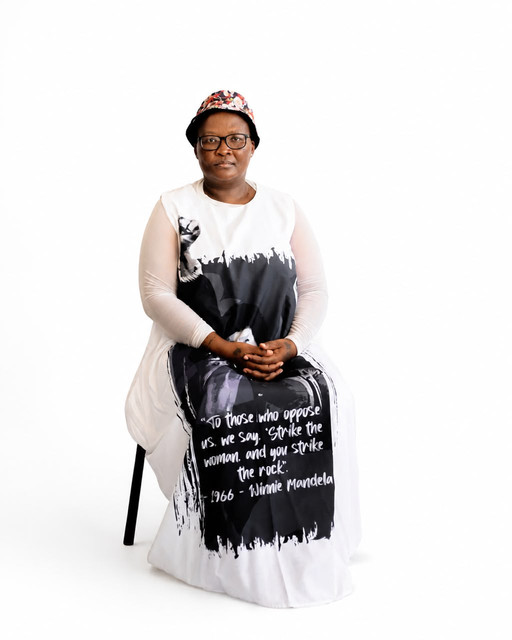

For Marasela, memory is both an archive and a form of resistance. She believes that the personal and the political are inseparable. Her practice is shaped by the conviction that family histories carry truths that institutional records frequently overlook. Photography, performance, video, printmaking, embroidery, and textile installation form the visual language through which these ideas unfold.
Every medium is selected for its capacity to preserve emotional memory. Every thread becomes an act of witness. Every stitch embodies remembrance. Rather than reconstructing history, Marasela creates spaces where history can be felt. Her works invite audiences to reflect on the fragile relationship between memory and identity.

Time is another essential material within her practice. Waiting is treated not as inactivity but as lived experience. Duration reveals emotional truths that cannot be expressed through a single image. This philosophy reached its fullest expression in Ijermani Lam (Waiting for Gebane). The work transformed the passage of years into a meditation on absence, devotion, and hope.
Senzeni Marasela is a multidisciplinary South African artist whose practice is rooted in memory, history, and acts of remembrance. Her work explores the lived experiences of Black South African women whose voices have often been excluded from official historical narratives. She approaches art as a space where forgotten lives can be encountered with dignity.

Central to her practice is the fictional figure of Theodorah. Theodorah serves as an alter ego through whom Marasela examines displacement, migration, and generational memory. She embodies countless women whose lives were transformed by apartheid and systems of migrant labour. Through long-duration performances, Theodorah becomes a living archive.
Marasela frequently returns to the colour red. Within her work, red signifies the landscape, the body, and historical violence. It recalls the dust of rural communities and the mine dumps that altered both land and memory. It also speaks to endurance, sacrifice, longing, and love. The repetition of red transforms colour into testimony.